SBLET Innovation Expedition: Real-world training meets virtual air support
Leonita Avdyli, Innovation Spaces, armasuisse Science and Technology (S+T)
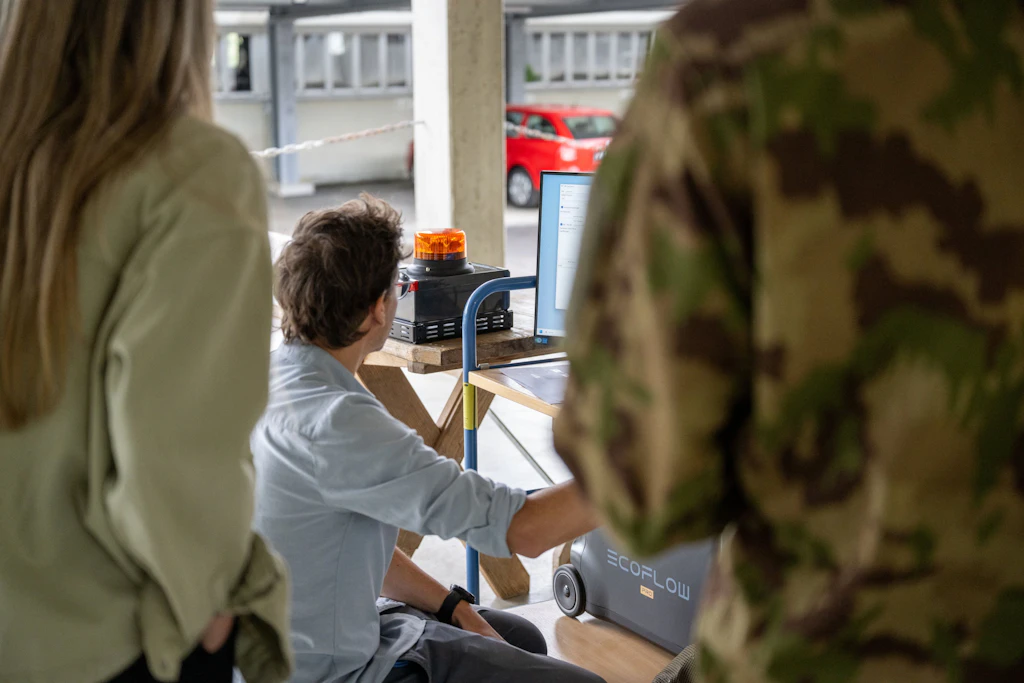
How can joint operations between the Air Force and ground forces be trained in a realistic manner when air assets (e.g. helicopters) are in short supply? This is the question being addressed by the ‘Simulation Boosted Live Environment Training’ (SBLET) innovation expedition, a joint initiative between armasuisse Science and Technology (S+T) and the Special Forces Command (KSK).
Joint Terminal Attack Controllers (JTACs), also known as air control officers, play a central role in Joint Fire Support (JFS). This involves coordinating air support to provide support to ground forces. To this end, they identify and locate targets, coordinate the deployment of aircraft and ensure that air-to-ground missions are carried out safely and precisely. Regular training is required to maintain and further develop this capability. Currently, this takes place either using aircraft or in simulation environments. However, both approaches present challenges: air assets are costly and available only to a limited extent, whilst purely virtual training can only replicate real-world operations to a limited degree.
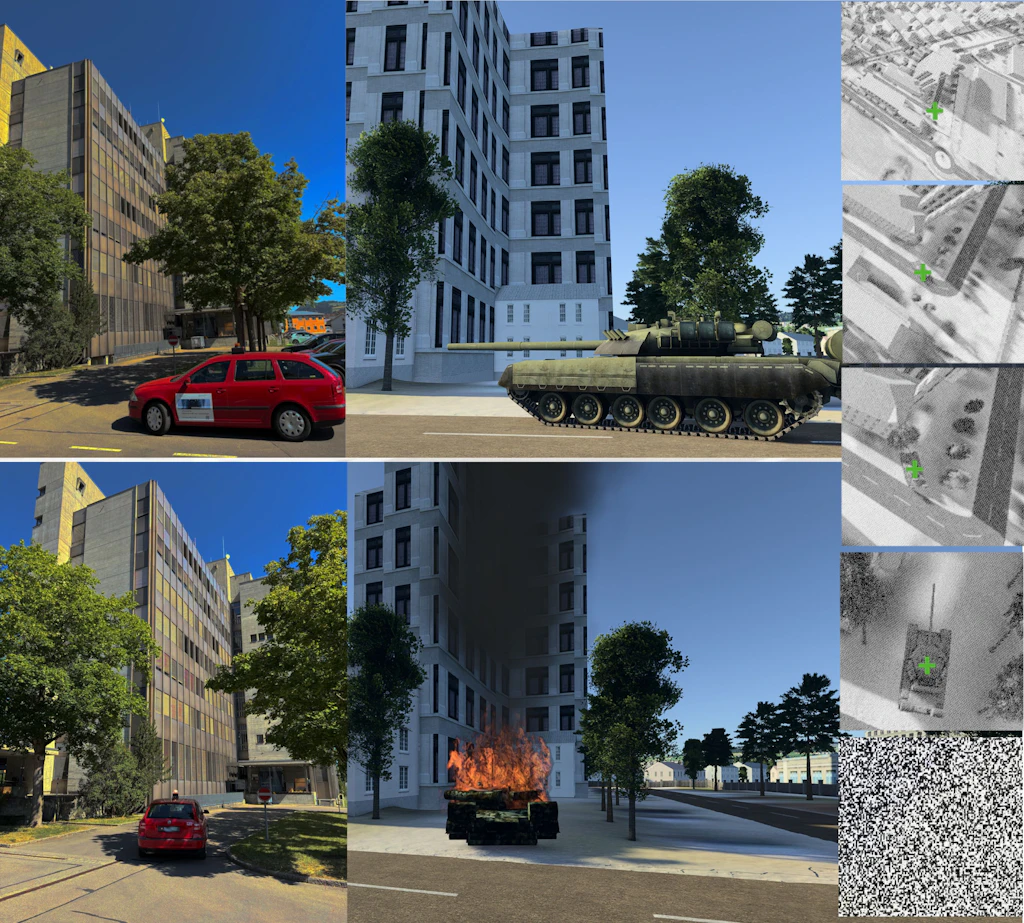
SBLET is therefore pursuing an innovative approach: the JTAC trains alongside ground troops in real terrain, wearing their official kit and following standard procedures. At the same time, air support is provided by a pilot in a virtual simulation environment. Target information, markings and other relevant data are exchanged between the real world and the simulation, ensuring that both sides have access to the same information regarding the training situation at all times. This is made possible by a technology demonstrator developed as part of the research activities of the AI and Simulation Competence Centre at armasuisse S+T. This demonstrator provides the interface between the simulation software and the real environment.
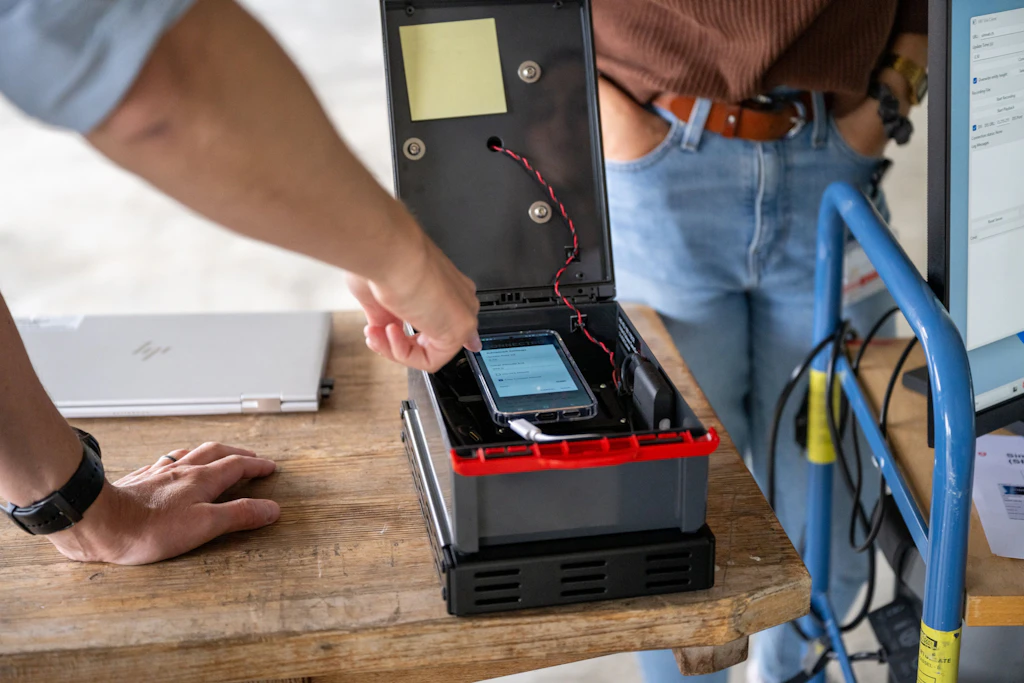
As part of the innovation expedition, research is being carried out to determine whether and how such a live-virtual connection can be implemented technically and operationally. Particular attention is being paid to the integration of real operational resources, user-friendliness and the realism of the training. SBLET is being used to explore a promising approach to making education and training more flexible, realistic and resource-efficient in the future.
The work is being carried out in the Idea Lab Innovation Space at armasuisse S+T. This is a methodologically open platform in which experts from the DDPS work together with the end-users – and, where necessary, with the involvement of third parties – to jointly develop solutions. Following the decision to implement the project in January 2026, the concept was further developed in the armasuisse S+T Innovation Spaces. The first successful tests took place in Thun in June 2026. Further validation and expansion phases are scheduled for November 2026. In the long term, the approach could prove beneficial not only for the KSK but also for other education and training scenarios within the Swiss army.